



Ethnohues logoEthnohues logo
Ethnohues logo
  • Home
  • Our Heritage
  • Career
  • Blog
  • Contact us
Sign in
0
0 0
  • Sador MekhelaEthnohues handloom and handcrafted jewellery collection
  • SareeEthnohues handloom and handcrafted jewellery collection
  • StolesEthnohues handloom and handcrafted jewellery collection
  • Assam Ethnic JewelleryEthnohues handloom and handcrafted jewellery collection
  • Terracotta JewelleryEthnohues handloom and handcrafted jewellery collection
  • Combo OfferEthnohues handloom and handcrafted jewellery collection
  • Exclusive ProductsEthnohues handloom and handcrafted jewellery collection
Ethnohues logoEthnohues logo
0
0 My Wishlist

View Wishlist Add all to cart

0 0
Ethnohues logo
  • Home
  • Our Heritage
  • Career
  • Blog
  • Contact us
Sign in
  • Sador MekhelaEthnohues handloom and handcrafted jewellery collection
  • SareeEthnohues handloom and handcrafted jewellery collection
  • StolesEthnohues handloom and handcrafted jewellery collection
  • Assam Ethnic JewelleryEthnohues handloom and handcrafted jewellery collection
  • Terracotta JewelleryEthnohues handloom and handcrafted jewellery collection
  • Combo OfferEthnohues handloom and handcrafted jewellery collection
  • Exclusive ProductsEthnohues handloom and handcrafted jewellery collection
Blog

What is Muga Silk? Everything You Need to Know About Assam’s Golden Silk

July 13, 2026 /Posted byadmin / 13 / 0
There is a silk in the world that gets more beautiful the more you use it. That sounds like a marketing line, but it happens to be true. Muga silk, woven for centuries along the banks of the Brahmaputra in Assam, has a strange and lovely quality that most fabrics do not. Its natural golden shine deepens with every wash, and every year it spends in your wardrobe. A muga silk saree bought by a grandmother often ends up looking richer on the granddaughter who inherits it.
If you have ever wondered why this fabric is spoken about with such reverence, or why it carries a price that rivals fine jewellery, this guide walks you through all of it. What muga is, where it comes from, why it cannot be grown anywhere else, and how to tell the real thing from the many imitations sold under its name.

What exactly is muga silk?

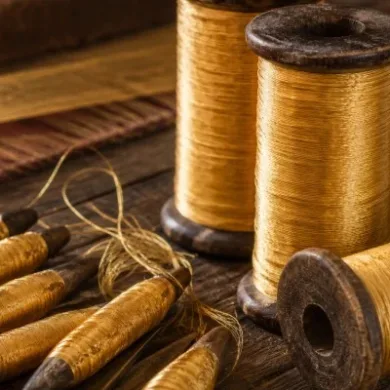
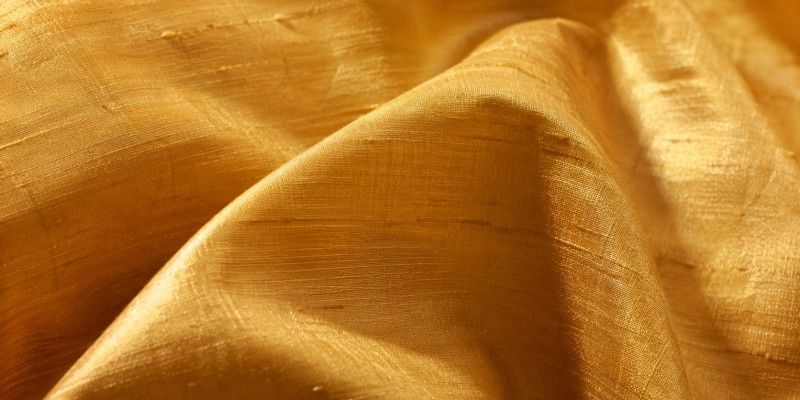
Muga is a wild silk produced by a specific moth found only in one part of India. The insect responsible is Antheraea assamensis, a semi-domesticated silkworm that spins a cocoon in a natural honey-gold shade. Unlike the pure white of mulberry silk, muga arrives already coloured. No dye is needed to give it that warm glow. The colour is baked into the fibre itself.
The Assamese have a word for this silk that says everything: they simply call it the golden silk. Locally it has been part of daily life and ceremony for longer than written records can confirm. Most historians trace its rise as a prized fabric to the Ahom dynasty, which ruled Assam for roughly six centuries starting in 1228. The Ahom kings treated muga as a royal cloth. They kept stores of it for gifts to visiting dignitaries and brought skilled women weavers to the court to produce it. That patronage turned muga weaving into a household craft across the region, and it has stayed that way.
Two things set muga apart from every other silk you will handle. The first is its toughness. Testing has shown muga to have the highest tensile strength among natural silks, which is why researchers have looked at it for uses as unlikely as parachute cords and even bulletproof material. The second is that shine that improves with age. A good muga piece genuinely can outlive the person who first wore it, which is why in Assam it is passed down as an heirloom rather than discarded. This is a big part of what makes the golden silk of Assam so different from ordinary luxury fabric. You are not buying something that fades. You are buying something that ripens.

Why muga can only come from Assam

People have tried to rear muga silkworms elsewhere. It does not work. The moth is fussy in a way that ties it permanently to the Brahmaputra Valley, and understanding why explains most of what makes this fabric rare.

A silkworm that refuses to travel

The muga silkworm is semi-wild, which means it is reared outdoors rather than in controlled indoor sheds. That leaves it exposed to whatever the local climate and air happen to be. The insect is extremely sensitive to pollution and to temperature. It needs conditions in a narrow band, roughly 25 to 27 degrees Celsius with high humidity of around 75 to 85 percent, to complete its life cycle. Move it somewhere drier, dirtier, or cooler and the worms simply do not survive. This is why the fabric stays confined to Assam. The insect will not cooperate anywhere else.

A diet that creates the colour

The muga caterpillars are picky eaters too. They feed almost entirely on the aromatic leaves of the som and sualu trees, with a few other local plants like mejankari in the mix. This diet is not a small detail. The chemistry of those leaves is what gives muga its signature golden tone and part of its structural strength. Feed the worm something else and you do not get the same silk. The land, the trees, the insect, and the fabric are all locked together. That is the real reason muga has never been successfully copied at scale.

Protected by a GI tag

Because muga is so tied to its place of origin, it received a Geographical Indication tag in 2007. A GI tag is a legal recognition that a product belongs to a specific region and cannot be authentically produced elsewhere. Champagne has one. Darjeeling tea has one. Muga silk of Assam has one too. For a buyer, the practical value is simple. It means the name muga is protected, and anything sold as genuine muga is meant to trace back to Assam’s registered weaving clusters.

Why muga is often called more expensive than gold

This phrase gets thrown around a lot, and it is not just poetry. Muga is one of the costliest silks in the world, and the price has climbed sharply over the years. In the 1990s, muga yarn sold for something like 800 rupees a kilo. Today that figure has crossed 20,000 rupees a kilo. A single muga mekhela chador, the traditional two-piece Assamese garment, can range from around 35,000 rupees to well over a lakh depending on the weave and design work. So where does that cost come from?

It takes an enormous number of cocoons

The yields are small. Producing enough yarn for one full mekhela chador takes roughly a kilogram of silk, and gathering that much requires several thousand cocoons. To put it another way, a single acre of rearing land might produce only a few hundred grams of usable silk in a cycle. There is no shortcut. The maths of muga production simply does not favour volume, and that scarcity feeds directly into the price.

The rearing is slow and risky

Because the worms live outdoors, rearing muga is closer to farming than factory work, and it carries all of farming’s uncertainty. The caterpillars have to be watched and protected from birds and wasps that treat them as an easy meal. A bad spell of weather, a nearby tea plantation spraying pesticides, or emissions from an industrial unit can wipe out a rearing cycle. Nothing about the process can be rushed or fully controlled, and every one of those risks adds to what the final yarn costs.

Every step is done by hand

From rearing the worms to reeling the yarn to weaving the cloth on traditional throw-shuttle and lion looms, muga is a hand craft from start to finish. Much of the weaving still happens in and around Sualkuchi, a town so central to Assamese silk that it is nicknamed the Manchester of the East. Skilled artisans, many of them women who learned from earlier generations, spend days on a single garment. When you buy authentic Handwoven Assam Silk Sarees & Jewellery, you are paying for that human labour, not for a machine’s output. That is the honest reason genuine muga carries the price it does.

How to tell real muga from a fake

Muga’s fame has a downside. Where there is a premium fabric, there are cheaper imitations sold under the same name, often mulberry or tussar silk dyed to a golden colour. Here is how to check before you spend serious money.
  • Look at the colour honestly. Real muga is a soft, natural honey-gold with a slightly uneven, organic tone. A colour that looks too bright, too uniform, or artificially yellow is a warning sign of dye on ordinary silk.
  • Notice the shine over time. Genuine muga gets glossier with washing rather than duller. Sellers of real muga will happily tell you this, because it is one of the fabric’s proudest traits.
  • Feel the weight and texture. Muga has a distinctive firm, resilient hand. It is fine but strong, not flimsy. Once you have handled the real thing a few times, imitations feel noticeably softer or thinner.
  • Ask about the source and the GI. Authentic muga comes from Assam’s weaving clusters. A trustworthy seller can tell you where a piece was woven and stands behind its authenticity rather than dodging the question.
This is exactly why sourcing matters more than shopping on price alone. At Ethnohues, every saree and garment is sourced directly from master weavers in Assam, which removes the guesswork that trips up buyers in crowded marketplaces.

Muga's place in Assamese life

To really understand muga, it helps to see how deeply it sits inside Assamese culture. This is not a fabric people wear casually. It carries weight, and I mean that in the emotional sense.

The heirloom of every household

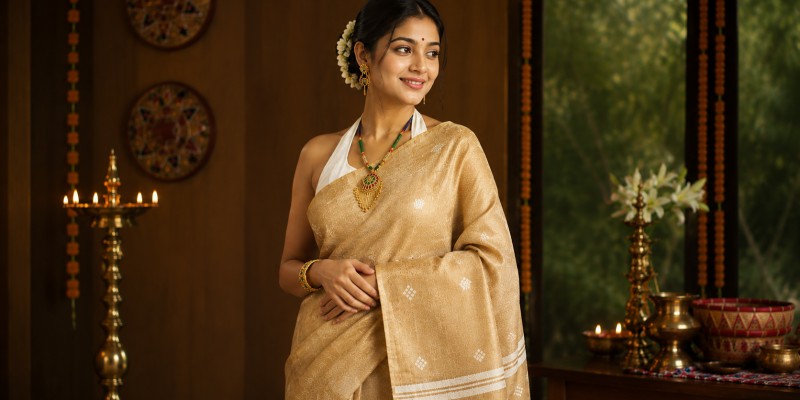
In Assam, owning a muga mekhela chador is a point of pride for a woman. It is commonly gifted to a bride as part of her wedding trousseau, treated with the same importance as gold ornaments. Because the fabric lasts for decades and only grows more lustrous, these garments move down through families. A mother’s muga becomes a daughter’s, then a granddaughter’s. Few textiles carry that kind of continuity.

The cloth of celebration

During Bohag Bihu, the spring festival that marks the end of the harvest and the Assamese new year, muga garments come out for both men and women. Traditional motifs woven into the cloth, figures like the kinkhap with its facing lions, the paisley-shaped kolka, and floral and creeper patterns drawn from nature, carry meaning that goes back generations. The weaving is not just decoration. It is a record of Assamese identity worked into thread.

Muga, eri, and pat: how Assam's silks differ

Assam produces three famous silks, and buyers often confuse them. A quick comparison helps you shop with confidence.
  • Muga is the golden one. Naturally honey-coloured, extremely strong, and the most expensive of the three. It is the silk this whole guide is about.
  • Eri is the gentle one. Sometimes called Ahimsa silk because it is processed without killing the silkworm, eri has a soft, warm, wool-like feel and is prized as a sustainable, cruelty-free fabric.
  • Pat is the classic white silk. This is Assam’s mulberry silk, a bright white or off-white cloth used widely in festive mekhela chador, distinct from muga’s gold.

Each has its place. Muga for the once-in-a-lifetime heirloom, eri for everyday softness with a clear conscience, and pat for the crisp elegance of a classic Assamese ensemble.

Caring for your muga silk

A muga piece is an investment, and treated well it will genuinely outlast you. The good news is that caring for it is not complicated. Gentle handwashing actually improves the shine over time, which is unusual for a luxury fabric. Store it in a cool, dry place, ideally wrapped in soft cotton rather than plastic so the fibre can breathe. Keep it away from direct perfume and harsh chemicals. Handled with a little respect, muga rewards you by looking better in year twenty than it did on the day you bought it.

Buying muga silk the right way

If you are ready to bring home a piece of this heritage, the single most important decision is who you buy from. Muga’s premium price and its many imitations mean that trust is everything. Buy from a seller who sources directly from Assam’s weavers, who can tell you the story behind a garment, and who treats authenticity as non-negotiable rather than a nice-to-have.

Ethnohues was built around exactly that principle. The collection brings genuine Assam handloom, including pure muga, eri, and pat silk, straight from master weavers to your wardrobe, with jewellery to match. If you want to own a fabric that carries centuries of Assamese craft and only grows more beautiful with age, that is where to start. You can explore the full range at ethnohues.com.

Muga is one of those rare things that lives up to its legend. A cloth that begins gold and grows more golden, made by an insect that will live nowhere but the valley it came from, woven by hands that learned the craft from their mothers. Owning a piece of it is owning a piece of that story.
Terracotta Jewellery: What It ...
Ethnohues Assamese handloom and traditional jewellery
How to Style a Mekhela Sador f...

Related posts

image1
Blog
Read more

How to Style a Mekhela Sador for Weddings and Festivals

July 13, 2026 0
If you have ever stood in front of a mekhela sador wondering where to start, you are... Continue reading
Ethnohues Assamese handloom and traditional jewellery
Blog
Read more

Terracotta Jewellery: What It Is, How It’s Made, and Why It’s Back in Style

April 16, 2026 0
Fashion trends come and go, but some traditions always return to the spotlight. Terracotta jewellery is one of these,... Continue reading
Ethnohues Assamese handloom and traditional jewellery
Blog
Read more

What Is Trending in Ethnic Wear in 2025: A Complete Style Guide

February 11, 2026
Ethnic fashion in India has always been a gorgeous fusion of culture, handicraft, and creativity... Continue reading

Add comment Cancel reply

Your email address will not be published. Required fields are marked

Ethnohues logo

Newsletter

Subcribe to get information about products and coupons


    • Quick Links

      • Sador Mekhela

      • Saree

      • Stoles

      • Assam Ethnic Jewellery

      • Terracotta Jewellery

      • Exclusive Products

    • Business

      • Privacy Policy

      • Terms & Conditions

      • Careers

      • Blogs

    • +91 7892516379
    • contact@ethnohues.com
    Facebook Instagram
    EthnoHues: The Destination for Authentic Muga Silk Sarees 
    Specializing in pure Assamese handloom, EthnoHues brings the world-renowned Muga silk saree directly from the heart of Assam to your home. Our collection is defined by its signature golden lustre and artisanal craftsmanship, ensuring you receive a premium, pure Muga silk saree that honours traditional weaving while exuding timeless sophistication.
    Authentic Assamese Attire: Pator & Pat Mekhela Sador
    Discover a comprehensive collection of Assamese attire, from festive white Mekhela Sadors to exquisite Pator Mekhela Sadors for weddings. We specialize in authentic Pat and Kesa Pat Mekhela Sadors, each hand-woven with traditional Junbiri patterns. These pieces are designed to be cultural landmarks in your ethnic wardrobe, ensuring total authenticity. Premium Handloom: Pat Silk, Eri Silk, and Beyond
    EthnoHues is your trusted source for premium Pat silk, luxurious Paat creations, and soft Eri silk sarees across India. By prioritizing a design-first approach, we ensure that every Muga Mekhela and Pat silk saree is a masterpiece of textile heritage. Shop the finest Paat Mekhela Sadors at competitive and original Muga silk saree prices.
    Developed and Designed by BUD
    WhatsApp chat
    WhatsApp chat