





Terracotta necklaces have moved from being a regional craft tradition to a genuine fashion statement, worn by people who want jewellery with character, story, and a visible human hand behind it. In a market flooded with mass-produced metal and plastic accessories, terracotta jewellery offers something increasingly rare: a piece that’s shaped, molded, and finished entirely by an artisan, with no two pieces ever being quite identical.
If you’ve come across terracotta necklaces on Instagram, at a boutique, or through a friend who swears by them, and you’re wondering whether they’re worth adding to your collection or your product catalog, if you’re a business owner exploring ethnic and sustainable jewellery categories this guide covers everything from what terracotta jewellery actually is, how it’s made, why it’s having a moment globally, and how to tell an authentic handcrafted piece from a mass-produced imitation.
What Is Terracotta Jewellery?
Terracotta jewellery is exactly what the name suggests: jewellery made from terracotta, a type of fired clay that’s been used for pottery, sculpture, and decorative art across civilizations for thousands of years. The word itself comes from Italian, meaning “baked earth,” which captures the essence of the material natural clay, shaped by hand, then hardened through firing.
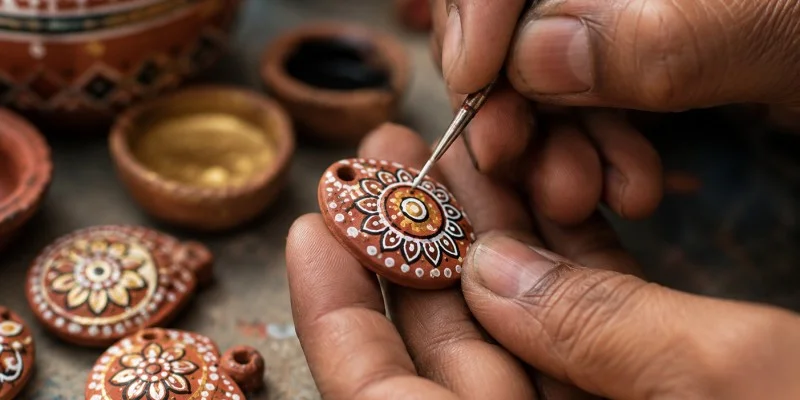
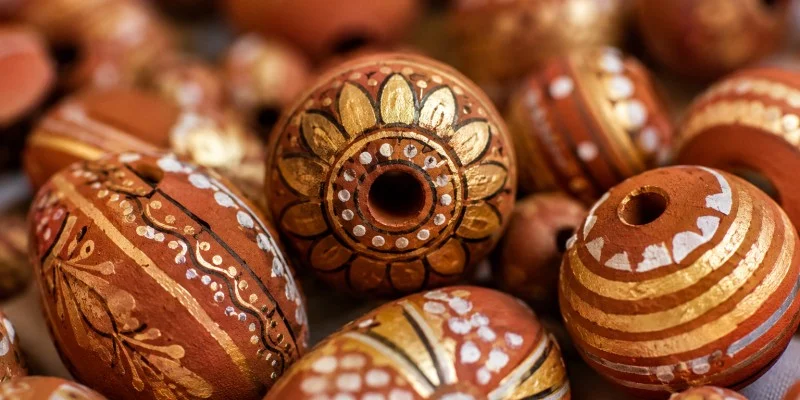
For jewellery specifically, artisans mold clay into beads, pendants, and intricate shapes, let them dry, and then fire them in a kiln at high temperatures to achieve durability. The finished pieces are typically painted or glazed in vivid colors reds, golds, greens, blues and often finished with intricate hand-painted patterns, small mirrors, beads, or metallic accents that reflect regional artistic traditions.
In India, terracotta jewellery-making is a craft with deep regional roots, particularly strong in parts of Bengal, where entire artisan communities have specialized in this form for generations, passing techniques down through families rather than formal training institutions.
Why Terracotta Jewellery Is Having a Global Moment
Terracotta accessories aren’t new, but their popularity has grown significantly in recent years, both within India and among international buyers. A few forces are driving that shift.
The Shift Toward Sustainable and Handcrafted Fashion
Consumers increasingly want accessories that don’t come from mass manufacturing lines. Terracotta jewellery fits neatly into this shift it’s made from natural clay, requires no synthetic materials, and each piece reflects real human craftsmanship rather than machine replication. For buyers who care about where their fashion comes from, that story matters as much as the look.
A Distinctive Aesthetic That Doesn't Look Like Everything Else
Metal and stone jewellery, however well made, tends to follow familiar design patterns across brands. Terracotta jewellery has a visual identity of its own warm earthy tones, bold hand-painted detailing, and a rustic, artisanal finish that stands out precisely because it doesn’t try to look like conventional fine jewellery.
Affordability Without Sacrificing Craftsmanship
Compared to gold, silver, or gemstone jewellery, terracotta pieces are significantly more affordable while still being entirely handmade. That combination of genuine craftsmanship at an accessible price point has made terracotta necklaces a popular entry point for people building a collection of ethnic and statement jewellery.
Versatility Across Occasions
A well-designed terracotta necklace can move from a casual daytime outfit to a festive or ethnic occasion depending on the design, color palette, and how it’s styled. That versatility makes it a practical addition to a wardrobe, not just an occasional-wear piece.
How Terracotta Jewellery Is Made: A Craft Rooted in Patience
Understanding the process behind terracotta jewellery helps explain both its price and its value. This isn’t a quick manufacturing process, it’s a multi-stage craft that typically unfolds over days, not hours.
1. Clay Preparation
Artisans start with natural clay, kneading and preparing it to the right consistency for molding. The quality of the clay directly affects how well the final piece holds detail and withstands firing.
2. Shaping and Molding
Using hand tools or simple molds, artisans shape the clay into beads, pendants, and other jewellery components. This stage relies heavily on manual skill symmetry, proportion, and design detail are all achieved by hand, which is part of why authentic pieces have subtle individual variation.
3. Drying
Shaped pieces are left to air dry slowly, a step that can’t be rushed without risking cracks or structural weakness later in the process.
4. Firing
Once dried, the pieces are fired in a kiln at high temperatures, transforming the soft clay into hardened, durable terracotta. This step is what gives the jewellery its structural strength and longevity.
5. Painting and Detailing
After firing, artisans hand-paint the pieces, often adding intricate patterns, motifs, or metallic accents. This stage is where much of the artistic personality of a piece comes through, and it’s typically done using fine brushes and techniques specific to a region’s artistic tradition.
6. Assembly
Finally, the finished terracotta components are strung, wired, or assembled into the completed necklace, earring, or statement piece, often combined with complementary beads, threads, or minor embellishments.
The entire process, from raw clay to finished necklace, can take several days of skilled labor for a single intricate piece which is worth keeping in mind when comparing prices against machine-made costume jewellery that takes minutes to produce.
Traditional Indian Jewellery Roots: Where Terracotta Fits In
Traditional Indian jewellery spans an enormous range of materials and regional styles: gold filigree from Odisha, silver oxidized jewellery from Rajasthan, temple jewellery from South India, and terracotta work concentrated particularly in Bengal and parts of Eastern India.
What makes terracotta distinct within this broader landscape is its accessibility and its deep connection to folk and rural artistic traditions, rather than royal or courtly jewellery-making. Historically, terracotta craft in Bengal has roots in temple architecture and decorative arts, where terracotta relief work adorned temple walls with intricate mythological and floral motifs. That same artistic sensibility, bold detailing, storytelling through pattern, and a connection to regional identity carries directly into terracotta jewellery today.
For buyers interested in traditional Indian jewellery that isn’t limited to gold and gemstones, terracotta offers a way to own something genuinely rooted in a specific regional craft heritage, made by artisan communities who’ve specialized in this exact form for generations.
Clay Jewellery vs. Other Handmade Jewellery: What Makes It Different
It’s worth distinguishing terracotta from other forms of clay jewellery you might come across, since the terms sometimes get used loosely.
- Terracotta jewellery specifically uses fired, unglazed or semi-glazed reddish-brown clay, typically hand-painted afterward the traditional Indian craft form.
- Polymer clay jewellery uses a synthetic, oven-cured clay material that’s more common in Western craft traditions, offering more color flexibility but lacking the natural, earthy material identity of true terracotta.
- Ceramic or porcelain jewellery typically involves finer, glazed clay fired at different temperatures, producing a smoother, glossier finish quite different from terracotta’s characteristically rustic texture.
If you’re specifically drawn to the earthy, handcrafted aesthetic associated with Indian artisan traditions, genuine terracotta is the material to look for; the reddish-brown base tone and hand-painted detailing are its signature, even before any color is applied.
How to Identify Authentic Handcrafted Terracotta Jewellery
As demand grows, so does the number of mass-produced or synthetic imitations marketed as terracotta. A few ways to tell the difference:
- Weight and texture. Genuine fired terracotta has a distinct, slightly grainy texture and a specific lightweight-but-solid feel that synthetic materials rarely replicate accurately.
- Hand-painted irregularities. Authentic pieces show small variations in painted patterns from bead to bead a sign of human hands, not a printing machine.
- Color depth. Genuine terracotta painting tends to have a matte, layered depth to the color rather than the flat, uniform sheen of plastic or resin imitations.
- Seller transparency. A seller who can speak to the artisan community or region the piece came from is generally more reliable than a generic marketplace listing with no sourcing information.
- Price relative to labor. Given the multi-day handcrafting process involved, a price that seems unusually low for an “intricate handmade” piece is worth questioning.
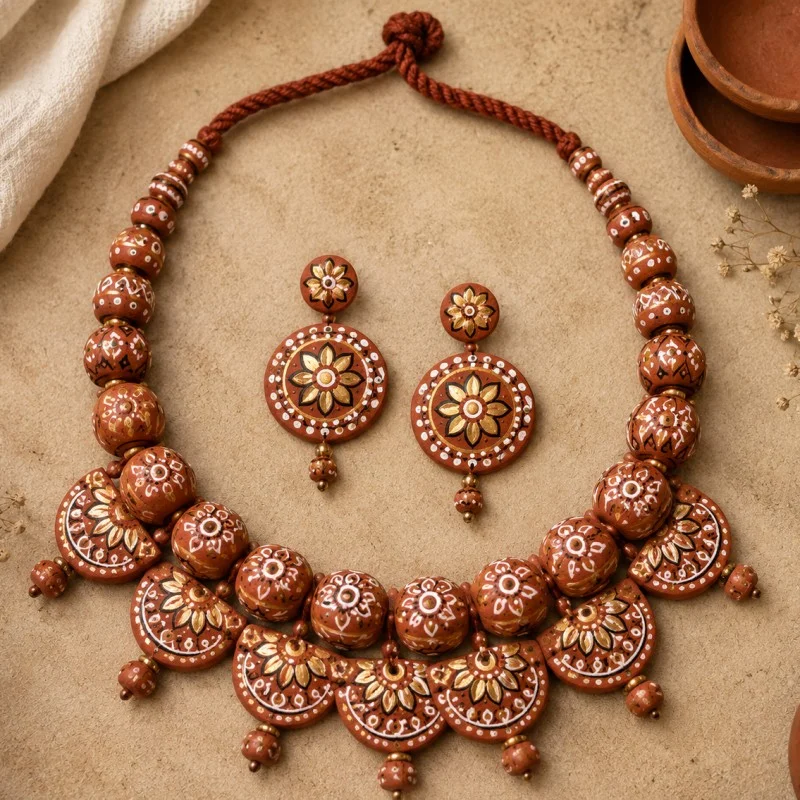
This is where sourcing matters as much as the finished look. EthnoHues works directly with artisan communities, primarily in Bengal, to bring genuinely handcrafted terracotta necklace sets, earrings, and statement pieces to buyers who want the real craft, not an imitation.
Styling Terracotta Jewellery: Making Earthy Elegance Work for You
One of the most appealing things about terracotta jewellery is how versatile it is once you understand how to style it.
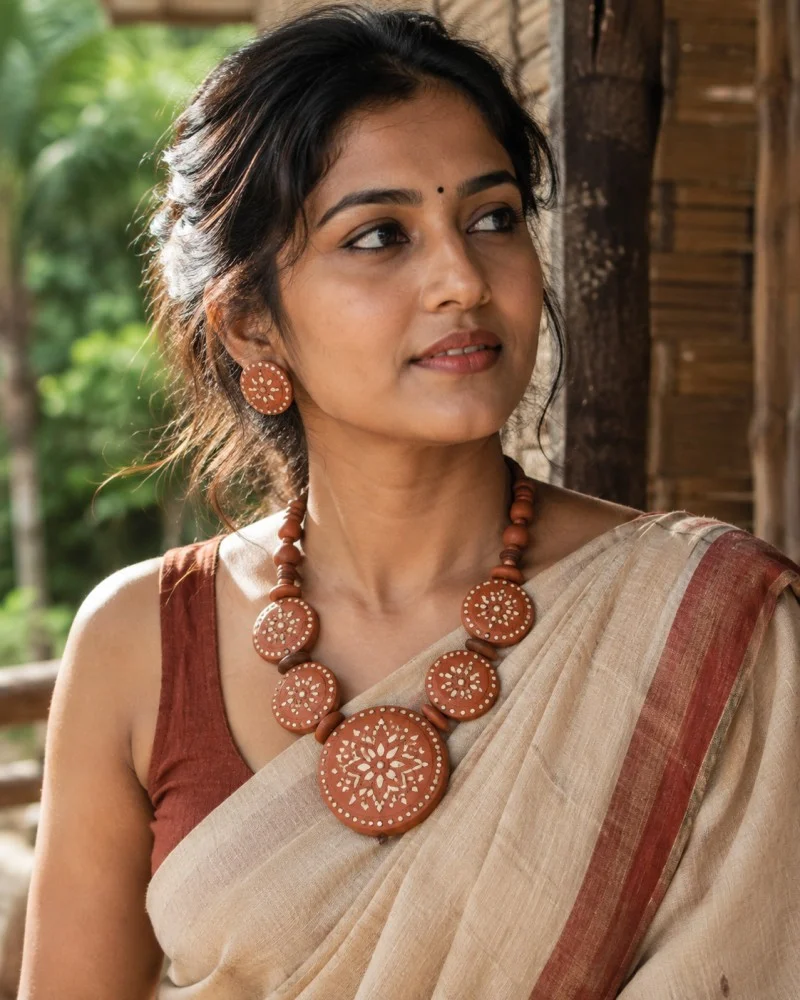
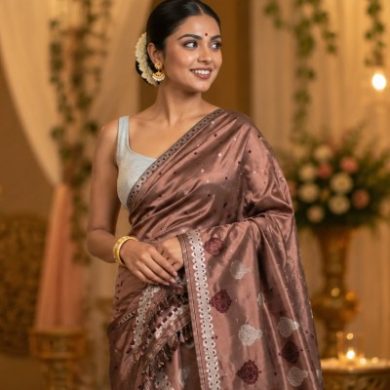
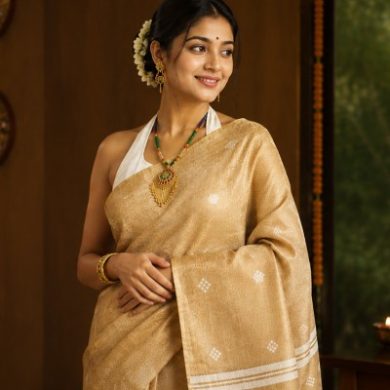
- With ethnic wear. Terracotta necklaces pair naturally with sarees, mekhela sador sets, and kurtas, complementing handwoven textiles with a similarly artisanal, earthy aesthetic.
- With simple, solid-color outfits. A bold terracotta statement necklace can be the focal point of an otherwise minimal outfit, letting the jewellery’s color and detailing stand out.
- Layered with other pieces. Smaller terracotta pieces can be layered with metal or beaded jewellery for a more eclectic, bohemian look.
- As a gifting choice. Because each piece is handcrafted and distinctive, terracotta jewellery makes a thoughtful gift for someone who values craftsmanship and cultural authenticity over conventional fine jewellery.
Caring for Terracotta Jewellery
Terracotta is durable once fired, but it still benefits from some care to keep it looking its best over time:
- Avoid water exposure. Prolonged contact with water can affect the painted finish over time, so it’s best to remove terracotta jewellery before swimming or bathing.
- Store separately. Keep pieces away from harder jewellery that could chip the surface during storage.
- Handle gently. While fired terracotta is sturdy, it can still crack or chip if dropped on a hard surface, so treat it with the same care you would any handcrafted ceramic item.
- Clean with a soft, dry cloth. Avoid chemical cleaners, which can dull the hand-painted detailing.
FAQs
What is terracotta jewellery made from?
Terracotta jewellery is made from natural clay that’s hand-shaped, dried, and fired in a kiln to harden it, then typically hand-painted with intricate patterns and colors by skilled artisans.
Is terracotta jewellery durable enough for regular wear?
Yes, once properly fired, terracotta is quite durable, though it should be handled with reasonable care to avoid dropping or prolonged water exposure, similar to how you’d care for any ceramic item.
Why is terracotta jewellery more expensive than plastic or synthetic costume jewellery?
Genuine terracotta jewellery involves a multi-day handcrafting process clay preparation, molding, drying, firing, and hand-painting done entirely by skilled artisans, which reflects real labor and craftsmanship rather than machine mass production.
Where does terracotta jewellery-making traditionally come from in India?
Terracotta jewellery has strong traditional roots in Bengal, where artisan communities have specialized in this craft for generations, drawing on the region’s broader terracotta art and temple architecture traditions.
How can I tell if terracotta jewellery is authentic and handmade?
irregularities in hand-painted detailing, a distinct grainy texture typical of fired clay, and transparency from the seller about which artisan community or region the piece came from, rather than generic, unattributed listings.
Final Thoughts
Terracotta jewellery represents something increasingly hard to find in modern fashion: a genuinely handmade product, rooted in centuries-old regional craft traditions, made by artisans who’ve dedicated their skill to this exact art form. Its earthy, distinctive aesthetic isn’t a passing trend it’s a return to valuing pieces with real character and story behind them.
Whether you’re drawn to the bold hand-painted detailing, the sustainable and handcrafted appeal, or simply want jewellery that doesn’t look like everything else in the market, authentic terracotta necklaces and statement pieces offer a way to wear a piece of India’s artisan heritage. If you’re exploring handcrafted terracotta jewellery for the first time, take a look at pieces sourced directly from artisan communities the difference in craftsmanship and story is immediately noticeable.


Add comment