




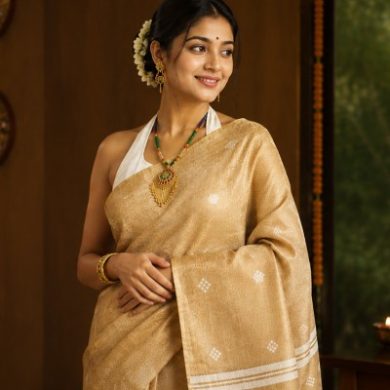
Assam silk sarees have been quietly building a global following among people who care about where their clothing comes from and how long it lasts. Among the different varieties of silk woven in Assam, one stands apart for both its history and its physical properties: Muga silk, often called the Golden Silk of Assam for the natural, sun-kissed shimmer that no dye or finishing process can replicate.
If you’ve ever wondered why a Muga silk saree costs more than an ordinary silk saree, or why families in Assam pass down Muga garments across generations instead of replacing them, the answer isn’t marketing; it’s biology, craftsmanship, and centuries of specialized weaving knowledge concentrated in one small region of Northeast India.
This guide covers what makes Muga silk genuinely different, why its durability isn’t just a claim but a documented property of the fiber itself, and what to actually look for when buying handloom Muga silk, whether it’s your first piece or an addition to a growing collection of authentic Assamese textiles.
What Is Muga Silk, Exactly?
Muga silk comes from the cocoon of the muga silkworm, Antheraea assamensis, a moth species found nowhere else in the world except Assam and the adjoining areas of Northeast India. Unlike the mulberry silkworm used for most silk production globally, the muga silkworm is largely wild rather than fully domesticated, feeding on specific native host trees rather than being farmed indoors on mulberry leaves.
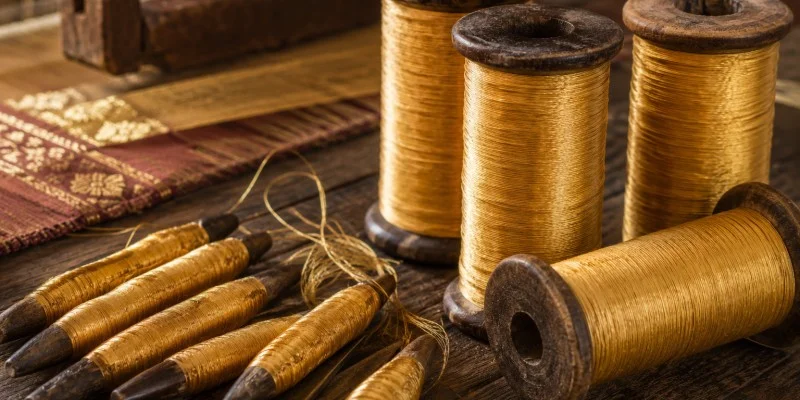
That semi-wild rearing process is part of what makes Muga silk so distinctive. The silkworms feed primarily on Persea bombycina (Som) and Litsea monopetala (Soalu) leaves, and something about that specific diet, combined with the region’s climate, produces a fiber with a naturally golden color that no other silk variety in the world has. It isn’t dyed gold — it comes out of the cocoon that way.
Historically, Muga silk has deep roots in the region. Records suggest silk production in Northeast India dates back to at least 321 BC, and Muga in particular has long been woven into royal and ceremonial garments in Assamese culture, historically reserved for special occasions and, in earlier centuries, associated with nobility.
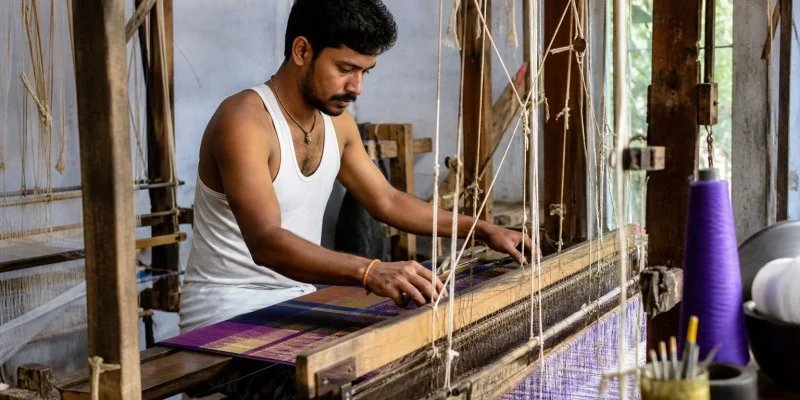
Muga Silk Durability: Why It's Called the World's Strongest Silk
This is where Muga silk moves from “beautiful heirloom fabric” to “genuinely superior textile” in a way that’s backed by more than tradition.
Research on the muga silkworm’s cocoon fiber has established that muga silk is considered the strongest known commercial silk in the world. That’s not a marketing claim from silk sellers — it’s a finding from entomological and textile research on the fiber’s tensile properties.
What Makes It So Strong
A few structural and biological factors contribute to this exceptional durability:
- Natural fiber tenacity. Muga silk fibers have inherently high tensile strength compared to mulberry and other wild silks, meaning the thread itself resists breaking and stretching under stress far better than most textile fibers.
- UV resistance. Muga silk has a notable property that most fabrics lack: it naturally resists UV radiation, which means the fiber’s golden lustre holds up under sunlight exposure rather than fading or degrading the way many dyed fabrics do.
- Resistance to washing and wear. Genuine handloom Muga silk is well known for actually improving in luster with each wash, rather than deteriorating — a property almost no other natural fiber shares. Many Assamese families own Muga garments that are decades old and still in wearable condition.
- Minimal processing. Because the color is natural rather than dyed, there’s no chemical dye layer to crack, fade, or wash out over time, which contributes significantly to the fabric’s long-term durability.
Real-World Longevity
In practical terms, this means a well-cared-for Muga silk saree or mekhela sador isn’t a garment you wear a handful of times and retire. It’s realistic to expect a piece to remain wearable, and often look better, after years of use and washing — which is part of why Muga silk has traditionally been treated as a family heirloom in Assam rather than a seasonal purchase.
Muga Silk Benefits Beyond Durability
Durability gets most of the attention, but Muga silk offers several other genuine benefits worth understanding before you buy.
Natural Golden Sheen That Never Fades From Dye Loss
Since the color comes from the fiber itself rather than a dye bath, the signature golden shimmer of Muga silk doesn’t wash out or fade the way dyed silk colors eventually can. This is one of the most visually distinctive features of the fabric and instantly recognizable to anyone familiar with Assamese textiles.
Breathability and Comfort
Like most natural silk varieties, Muga silk is breathable and comfortable across seasons — cooler against the skin in warm weather than synthetic fabrics, while still offering warmth in cooler conditions, which is part of why it works well as both a saree fabric and a mekhela sador fabric.
Hypoallergenic Properties
As a natural protein fiber with minimal chemical processing, Muga silk tends to be gentler on sensitive skin compared to heavily processed or synthetically blended fabrics.
Investment Value
Authentic handloom Muga silk holds its value in a way mass-produced textiles simply don’t. Given the labor-intensive rearing and weaving process, and the fact that the muga silkworm can only be reared in this specific region, well-maintained Muga pieces often become more valued over time — both sentimentally and, in some cases, in resale or heirloom contexts.
Cultural and Artisanal Significance
Every handloom Muga silk piece represents weeks or months of skilled labor from master weavers, many of whom have inherited techniques passed down through generations. Choosing handloom Muga silk over machine-made alternatives directly supports that traditional craft economy in Assam.
Assam Silk Saree Varieties: How Muga Compares
Assam produces more than one type of silk, and understanding the differences helps when you’re deciding what to buy.
Muga Silk
The golden, wild silk described above — the most durable and typically the most expensive of Assam’s silk varieties, prized for its natural sheen and longevity.
Pat (Mulberry) Silk
A pure white or off-white silk from domesticated mulberry-fed silkworms. Pat silk has a fine, smooth texture and is often used for more formal or bridal Assamese garments, offering a different aesthetic from Muga’s golden tone.
Kesa Pat (Raw Mulberry) Silk
An unprocessed, raw version of Pat silk with a more textured, matte finish — valued for its rustic, organic appearance compared to fully finished Pat silk.
Eri Silk
Sometimes called “peace silk” because of its non-violent extraction process, Eri silk has a distinct, slightly textured feel and is commonly used in stoles and everyday wear, offering comfort and warmth different from the more formal Muga and Pat varieties.
Each of these has its place, but for anyone specifically looking for the combination of luxury, durability, and cultural heritage that Assam silk is known for, Muga remains the benchmark.

How to Identify Authentic Handloom Muga Silk
With demand for Muga silk growing both in India and internationally, understanding how to spot the real thing matters, especially for buyers overseas who may not have hands-on experience with the fabric.
A few things to check:
- Natural golden color, not a uniform dyed gold. Authentic Muga has subtle variation in tone rather than the flat, uniform color of a dyed synthetic imitation.
- Texture and weight. Genuine handloom Muga has a distinct texture from hand-weaving — slight irregularities that machine-made or power-loom silk lacks.
- The burn test (for loose thread samples). Genuine silk, including Muga, burns slowly and smells like burning hair, unlike synthetic fibers which melt and smell like plastic. This isn’t practical for a finished garment, but it’s a useful check for loose thread if available.
- Sourcing transparency. Buying from a seller who can speak to which region and weaver community the piece came from is one of the most reliable ways to verify authenticity, since mass-produced imitations rarely offer that level of traceability.
- Price realism. Genuine handloom Muga silk involves months of labor-intensive rearing and weaving. A price that seems too low relative to comparable authentic pieces is worth questioning.
This is where working directly with a source that sources from master weavers matters. EthnoHues works directly with artisans in Assam to bring authentic Muga silk sarees, mekhela sador sets, and stoles to buyers in India and internationally, with the kind of sourcing transparency that’s hard to guarantee through generic marketplace listings.
Caring for Muga Silk: Protecting Your Investment
Given how long a genuine Muga silk piece can last, proper care matters. A few practical guidelines:
- Dry clean or hand wash gently with mild, silk-safe detergent — avoid harsh chemical cleaners.
- Air dry in shade, away from direct, prolonged sunlight, even though Muga is naturally UV-resistant.
- Store folded in breathable cotton cloth, not plastic, to prevent moisture buildup and allow the fabric to breathe between wears.
- Avoid tight, permanent folds for long-term storage — refold periodically to prevent fiber stress along the same crease lines over years of storage.
- Iron on low heat, ideally with a cloth barrier, to protect the natural sheen.
With this level of care, a Muga silk saree or mekhela sador genuinely can become a piece passed down across generations, which is exactly how it’s traditionally been treated in Assamese households.
FAQs
What makes Muga silk different from regular silk?
Muga silk comes from a wild silkworm species found only in Assam and produces a naturally golden color without dyeing. It’s also recognized as the strongest known commercial silk, giving it exceptional durability compared to mulberry and other silk varieties.
Is Muga silk worth the higher price compared to other silks?
For most buyers seeking longevity and authenticity, yes. Muga silk’s natural strength, UV resistance, and tendency to improve in luster with age mean a well-maintained piece can last for decades, often outlasting several ordinary silk garments over the same period.
Can Muga silk be worn in hot and humid climates?
Yes. Like other natural silks, Muga silk is breathable and comfortable in warm weather, while still offering enough insulation to be practical in cooler conditions, making it versatile across seasons and climates.
How do I know if a Muga silk saree is authentic handloom, not machine-made?
for natural color variation rather than flat uniform gold, slight weaving irregularities typical of handloom work, and sourcing transparency from the seller about the weaver community and region of origin. Authentic pieces from verified artisan sources are the most reliable option.
Does EthnoHues ship authentic Assam silk internationally?
Yes, handloom Assam textiles including Muga silk sarees and mekhela sador sets are shipped internationally to countries including the US, UK, Canada, UAE, and Australia on a duty-paid basis, sourced directly from master weavers in Assam.
Final Thoughts
Muga silk isn’t just another luxury fabric; it’s a genuinely rare material, produced by a silkworm species that exists nowhere else on Earth, woven by artisans carrying forward generations of specialized skill. Its durability isn’t a sales pitch; it’s a documented, biological property of the fiber that makes it one of the few textiles that can honestly be called a lifetime investment.
Whether you’re drawn to the golden shimmer, the cultural heritage behind it, or simply want a saree or mekhela sador that will genuinely last, authentic handloom Muga silk delivers on all three. If you’re exploring your first piece or adding to a growing collection of Assamese textiles, take the time to browse handwoven Muga silk sarees and mekhela sador sets sourced directly from Assam’s weaving communities; the difference in quality and story is worth experiencing firsthand.



Add comment